I’ll be honest — when someone first told me Pinterest could be a serious income source, I laughed a little. It felt like the place where people save cake recipes and aesthetic room decor. But after actually sitting down and understanding how the platform works, I genuinely changed my mind.
Pinterest isn’t social media in the traditional sense. It’s closer to a search engine and that changes everything about how it works for earning. If you’re a beginner trying to figure out how to make money from Pinterest, a student looking for a side income, or someone who already has a blog and wants more traffic, this guide is written for you. No gatekeeping, no fluff. Just what actually works, explained honestly.
What is Pinterest and How Does It Work?
Pinterest as a Visual Search Engine
Most people treat Pinterest like Instagram they post pretty pictures, get followers. That’s exactly why most people don’t see results. Pinterest is actually a visual search engine, which means people go there looking for answers to questions, not just to scroll. Someone searches “budget travel India,” and if your pin shows up, they click, visit your blog, and maybe buy something through your affiliate link.
That’s a fundamentally different user intent than, say, someone on Instagram who’s half-watching Reels while eating lunch.
Pinterest stores pins in a way that lets them surface for months but sometimes years — after you post them. That’s not how Instagram works. That’s not how Twitter works. And that difference is kind of the whole point.
How People Discover Content on Pinterest
When a user searches for something on Pinterest, the algorithm shows them pins based on relevance, not recency. So a pin you made six months ago can still bring in clicks today if it matches what someone searched. The platform rewards useful, well-optimized content rather than whoever posted last.
This matters because it removes the pressure to post constantly just to stay visible. You don’t need to go viral tomorrow. You need to create content that stays relevant and that’s something a person working 20 hours a week can actually pull off.
Boards, keywords in pin descriptions, and pin titles all work together to help Pinterest figure out who to show your content to. It’s a lot more SEO-like than most people realize.
Why Pinterest is Powerful for Passive Income
The reason so many bloggers and digital creators talk about Pinterest passive income is because of this compounding effect. You put in work once — designing a pin, writing a description, adding a link and that pin can drive traffic for a long time afterward. Unlike running ads (where you stop paying and traffic disappears), pins keep working.
There are people earning a few hundred dollars a month from blogs that haven’t published a new post in weeks, purely from old Pinterest traffic. That’s not magic. It’s just the way the platform’s search mechanics work if you set things up correctly upfront.
Can You Really Earn Money from Pinterest?
Is Pinterest Legit for Making Money?
Yes but not directly, at least not in most cases. Pinterest doesn’t pay you for posting (unless you’re in their Creator Rewards program, which has limited availability). The earning happens indirectly: through affiliate links embedded in pins, through traffic you send to a blog that has AdSense or sponsored content, through products you sell.
This distinction confuses a lot of beginners. They expect Pinterest to pay them like YouTube pays creators for views. It doesn’t work that way. Think of Pinterest more like a traffic source that you then monetize elsewhere.
That said, some people do use the Pinterest Creator Fund or brand partnerships, but that’s more advanced territory and honestly less reliable than the other methods.
Real-Life Examples of Pinterest Earnings
There are bloggers in the recipe niche who make anywhere from ₹20,000 to ₹1.5 lakh per month largely from Pinterest-driven blog traffic and affiliate commissions. In the US, bloggers like Elise from “House of Hepworths” and various others in the home decor or personal finance space have publicly talked about Pinterest as one of their top traffic sources.
On the affiliate side, people selling Amazon products through Pinterest pins have reported steady passive commissions especially in home decor, fitness gear, and digital tools. These aren’t overnight wins. Most of them spent 3–6 months building before they saw meaningful income.
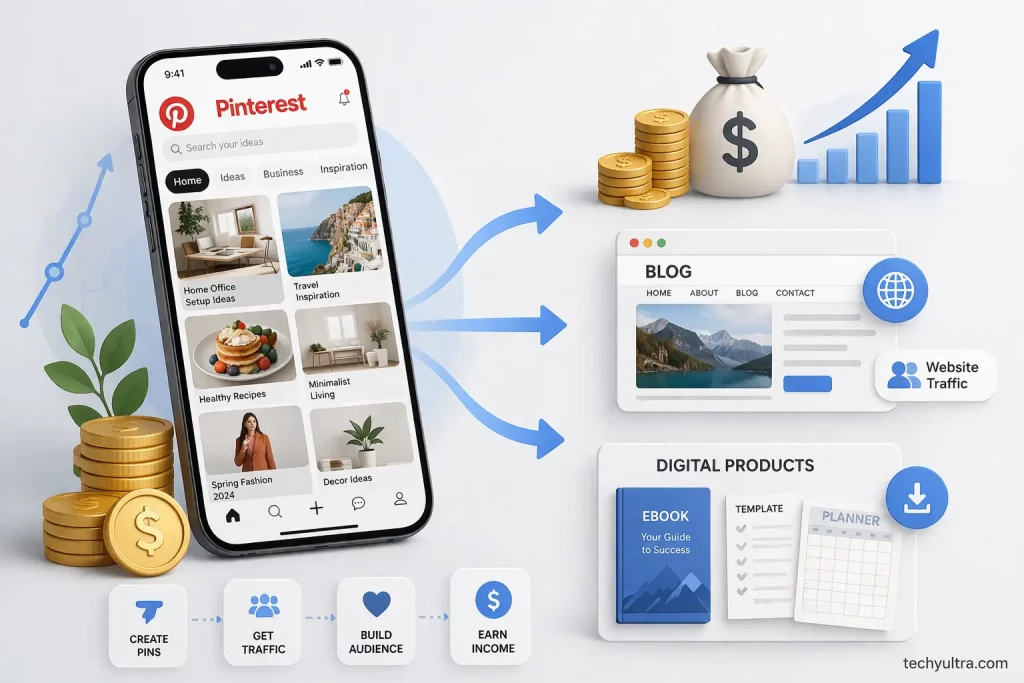
How Traffic Turns into Income
In practice, it’s messier than people think — someone might click your pin, skim your page, leave, come back later, and then buy.
The important thing to understand is that Pinterest’s value isn’t in the platform itself, it’s in what you do with the traffic it sends you. A well-optimized pin leading to a weak landing page won’t convert well. You need the whole chain to work.
Easiest Ways to Make Money from Pinterest
Affiliate Marketing (Best for Beginners)
This is probably the most accessible entry point for anyone starting out. You sign up for an affiliate program on Amazon Associates, ShareASale, Impact, or even direct brand programs and get a special tracking link, and embed that link in your Pinterest pins. When someone clicks and buys, you get a cut.
The reason this works on Pinterest specifically is that people come to the platform in a buying or planning mindset. Someone searching “best budget laptop for students” is researching a purchase. If your pin appears and links directly to an affiliate review or comparison, you’re exactly where you need to be.
A few things to keep in mind: always disclose affiliate links per FTC guidelines (Pinterest also requires this in their policy), and don’t just dump product links with no context. The pins that actually convert usually go to a blog post or review page first, rather than directly to Amazon. Sending them to a helpful article first builds trust.
Driving Traffic to Your Blog or Website
This is arguably the most sustainable model, and it’s what most serious Pinterest earners do. You run a blog — tech, food, finance, lifestyle, whatever your niche is and you create pins for every post. Pinterest sends you readers; you monetize through AdSense, Mediavine, display ads, or affiliate links on the blog itself.
The advantage here is that you control the monetization. You’re not at the mercy of Pinterest’s policies changing about affiliate links. Your blog is your asset, and Pinterest is just one channel feeding it.
For an Indian audience especially, niches like earning online, Android tips, budgeting, travel, and UPSC/exam prep tend to do well because search demand is high and the content can be evergreen.
Selling Digital Products (E-books, Templates)
This one requires a bit more upfront work, but the margins are 100% (no inventory, no shipping). If you’ve made a Canva template, a study guide, an Instagram post kit, or any kind of downloadable resource, Pinterest can help people discover it.
The workflow is simple: create your product, list it on Gumroad or Etsy or your own website, design a clean pin showing what it looks like, and link to the product page. Pinterest users in the “blogger tools,” “small business,” and “student life” categories actively look for this kind of content.
These are genuinely useful pinterest earning ideas for anyone with even moderate design skills. A pack of 20 Canva Instagram templates, priced at $7, selling 10 times a month is $70 of mostly passive income from one product.
Pinterest Account Management (Freelancing)
Not everyone wants to be a content creator. If you understand how Pinterest SEO works, you can manage Pinterest accounts for small businesses that don’t have time to do it themselves. This is a legitimate freelance service — businesses pay monthly retainers for someone to design pins, schedule them, and track analytics.
Rates vary from ₹5,000–₹25,000/month depending on the scope. You can find clients on Fiverr, LinkedIn, or by reaching out to small bloggers and Etsy sellers who have Pinterest accounts that are clearly neglected.Print-on-Demand & Dropshipping
These are more involved pinterest business ideas but worth mentioning. Print-on-demand (POD) means you design products — mugs, t-shirts, phone cases and a service like Printful or Printify handles production and shipping. You sell through Etsy or your own Shopify store, then use Pinterest to drive traffic.
Dropshipping works similarly but with existing products from suppliers. The margins are lower, but the setup cost is minimal.
Pinterest works well for both because product discovery is a huge part of what the platform is for. People literally save things they want to buy later. If your product is in that mix, you win. And honestly, earn money using pinterest through POD is underrated — it’s not as oversaturated as it is on Instagram or TikTok yet.
Step-by-Step Guide to Start Earning
Step 1: Create a Pinterest Business Account
Pinterest business account. It’s free. A business account gives you access to Pinterest Analytics, Rich Pins, and the ability to run ads if you ever want to. It also lets you claim your website, which builds credibility with the algorithm.
Use a clear profile photo (your logo or a professional headshot), write a bio that tells people what kind of content you share, and include your website URL.
Step 2: Choose a Profitable Niche
This is where most people overthink it. Pick something you know enough about to write 20+ pieces of content on. Profitable niches on Pinterest include personal finance, home decor, recipes, fitness, travel, parenting, and online business but honestly, many niches can work if there’s genuine search demand.
Do a quick search on Pinterest for your topic. If you see a lot of existing pins with high engagement, demand is there. If it’s a ghost town, rethink.
Step 3: Create Attractive Pins (Design Tips)
Canva is the go-to tool. Use vertical pins (2:3 ratio — 1000x1500px is standard). Bold text that’s readable even on a small screen, high contrast colors, and a clear call-to-action (like “Read More” or “Get the Free Template”) tend to perform well.
Avoid packing too much information into one pin. The goal of the pin is to make someone curious enough to click, not to give away everything on the image itself.
Step 4: Use SEO Keywords in Title & Description
Pinterest’s search bar is your best friend here. Type in your topic and look at the autocomplete suggestions — those are real things people search. Use those phrases in your pin title and description naturally.
Don’t stuff keywords. A description that reads like a human wrote it (“Here’s how to track your budget without a spreadsheet, using a simple Google Sheets template”) performs better than a keyword list.
Step 5: Add Affiliate Links or Website Links
When creating a pin, there’s a field for the destination URL. If you’re doing affiliate marketing, put your affiliate link there (with disclosure). If you’re driving traffic to a blog, link to the specific post — not just your homepage.
Deep linking (sending people to the exact relevant page) significantly improves conversion. Don’t make someone hunt around your site for the content the pin promised.
Best Pinterest Passive Income Strategies
Automating Pins for Consistency
Manual pinning every day isn’t realistic for most people. Tools like Tailwind let you schedule pins in advance — you can batch-create two weeks of content in one sitting and schedule them to go out at optimal times. Pinterest actually endorses Tailwind as an official partner.
Consistency matters because Pinterest’s algorithm does factor in how regularly you post. Scheduling takes the pressure off and keeps your account active even during busy weeks.
Creating Evergreen Content
This is the core of pinterest passive income. Evergreen content is stuff that stays relevant regardless of season or news cycle — “how to save money on a student budget,” “easy plant care tips for beginners,” “best free Android apps for productivity.” These topics get searched year-round.
Trending content gets a spike then dies. Evergreen content builds slowly but keeps compounding. If you have 50 evergreen pins out there, each one is quietly sending a trickle of traffic that adds up.
Using Pinterest Trends Tool
Pinterest’s Trends tool (trends.pinterest.com) shows you what’s gaining momentum on the platform. If you publish content around a rising trend early, your pins get in front of a growing audience before it gets crowded.
For example, if “AI tools for students” starts trending, an article on that topic with a well-designed pin can pick up a lot of traffic in the weeks that follow.
Tips to Grow Faster on Pinterest
Post Consistently (Daily/Weekly Strategy)
Aim for at least 5–10 pins per day if you’re trying to grow faster, or at minimum 1–2 per day consistently. These don’t all have to be original pins — you can repin relevant content from others in your niche, which also helps signal to Pinterest what your account is about.
Focus on High-Quality Pin Design
Blurry images, hard-to-read text, and generic stock photos don’t convert. Pinterest is visually competitive. Spend time making pins that look good. It doesn’t have to be fancy — clean, minimal designs with clear text often beat overly designed ones.
Look at what’s performing well in your niche by searching your keywords and observing the top results. You don’t copy them, but you understand what visual style is working.
Use Keywords Smartly (Pinterest SEO)
Your board names, board descriptions, pin titles, and pin descriptions all contribute to how Pinterest categorizes your content. Don’t ignore board descriptions, a lot of beginners leave them blank.
Include relevant keywords in all of these, but keep it natural. Write for the human first, the algorithm second.
Analyze Performance with Pinterest Analytics
Once you’ve posted 20–30 pins, start checking analytics to see which ones get the most impressions, saves, and outbound clicks. Double down on what’s working — make more pins linking to those same blog posts, or create similar content on the same topics.
Outbound clicks is the most important metric if you’re trying to drive traffic or affiliate sales. A pin with 10,000 impressions but 5 clicks isn’t doing the job. A pin with 500 impressions and 80 clicks is.
Common Mistakes Not to Do
Ignoring SEO
Pinterest is a search engine. If you don’t treat it like one, you’re basically posting into the void. People who skip keyword research wonder why their pins don’t get seen — it’s not just about design, it’s about discoverability.
Posting Low-Quality Pins
There’s still a temptation to batch-create 50 mediocre pins rather than 10 good ones. Don’t. Pinterest’s algorithm can identify low-engagement pins and reduce their distribution. Quality matters more than raw volume.
Expecting Instant Results
I want to be straight about this: Pinterest takes time. Most accounts start seeing meaningful traction after 3–6 months of consistent posting. If you quit at month two because nothing’s happening, you’re quitting right before things usually start moving.
This isn’t unique to Pinterest — most content-driven channels work this way. Patience is genuinely part of the strategy.
Not Choosing the Right Niche
General accounts that try to cover everything tend to struggle. Pinterest’s algorithm is better at categorizing and distributing accounts that clearly have a theme. Picking one or two related niches and sticking to them tends to work better than trying to be all things to all people.
How Much Money Can You Make from Pinterest?
Beginner Income Expectations
Realistically, in the first 3–6 months, you might earn anywhere from ₹500 to ₹5,000/month — mostly from affiliate links or small amounts of ad revenue from blog traffic. Some people earn nothing in this period because they haven’t hit critical traffic mass yet.
That’s normal. The early months are about building your library of pins and finding what works.
Advanced Earnings Potential
Creators who’ve been at it for a year or two with a monetized blog can earn ₹30,000–₹2,00,000+/month from Pinterest-driven traffic. In USD, bloggers in the US who use Pinterest as their primary traffic source and monetize with Mediavine ads often report $2,000–$10,000/month once they’re past 50,000 monthly sessions.
These aren’t typical results for someone starting out, but they’re not rare either among people who stuck with it.
Factors That Affect Income
Your niche matters a lot. Finance, health, and tech niches have higher ad revenue per visit than, say, quotes or memes. Your monetization method matters — affiliate marketing and digital products generally pay more per visitor than display ads. And the quality of your pins and landing pages affects conversion directly.
There’s no single formula. People with 10,000 monthly visitors can earn more than people with 50,000 if their monetization is smarter.
Conclusion
Pinterest genuinely works as a traffic and income source — but only if you understand what it actually is. It’s a search engine, not a social network. The people who earn from it consistently are the ones who treat it that way: doing keyword research, creating useful content, and staying patient through the slow early months.
The good news is that the barrier to entry is low. You don’t need a big audience, a fancy camera, or money to spend on ads. You need a topic you understand, some time to create pins, and the willingness to learn what works through trial and error.
If you’ve been sitting on a blog idea or a digital product you want to sell, Pinterest might be the traffic source that actually moves the needle. If you try this for two weeks and quit, it won’t work. If you stick with it for three months, you’ll at least understand whether it can work for you.
Frequently Asked Questions
What is the easiest way to earn money using Pinterest?
The most accessible starting point is affiliate marketing. Sign up for Amazon Associates or another affiliate program, create pins that link to helpful content (ideally a blog post that reviews or compares products), and let Pinterest search traffic do the rest. No upfront investment required.
Do I need a website to make money from Pinterest?
Not strictly, you can link affiliate pins directly to product pages. But having a website or blog significantly increases your earning potential because you control how you monetize that traffic. A blog also lets you diversify across AdSense, affiliate links, and digital products simultaneously.
How long does it take to start earning from Pinterest?
Most people see their first meaningful earnings between month 3 and month 6. The first few months are about building a pin library and letting Pinterest’s algorithm understand what your account is about. Expect slow growth initially — it picks up.
Is Pinterest good for passive income?
Yes, and it’s one of the better platforms for it precisely because old pins keep circulating in search results. Once you’ve built a library of well-optimized pins pointing to monetized content, they continue driving traffic and income without constant new work. That’s the core appeal of Pinterest passive income for bloggers and digital creators.

Hi, I’m Aditya Sharma, a BSc in Radiology student and founder of Techy Ultra, a tech blog covering AI tools, Android tips, blogging, online earning, digital tools, useful apps and software tips & tricks. I have a self-taught background in tech field and like to share information from this blog.